
Gratitude is the one occasion nobody schedules. There is no date in the calendar, no tradition telling you what to send, and no social pressure forcing your hand. Which is exactly why thank you flowers land so hard: the recipient knows you chose to do it.
This guide covers who to send them to, what to send, and how to write a card that does the actual work.
Who deserves thank you flowers more often than they get them
Teachers. End of term, end of year, or after a year where someone went above and beyond for your kid. A vased arrangement for the staffroom is better than a bouquet the teacher has to carry home on the bus.
Nurses, midwives and hospital staff. Send to the ward rather than an individual, since many wards prefer a shared arrangement. Check the ward’s flower policy first.
Neighbours. Fed the cat, took the bins out, signed for the parcels for three weeks. This is the most underserved category of all.
Hosts. After a dinner party or a weekend stay, flowers sent the next day are far better than flowers brought on the night, because the host is not juggling a bouquet while cooking.
Colleagues who covered for you. Someone carried your workload while you were away. Thank you flowers on their desk say it publicly, which is part of the point.
Tradies, carers and service people. The electrician who came out on a Sunday. The carer who looks after your parent. The people who are thanked least and deserve it most.
Friends who showed up in a crisis. The ones who sat with you, drove you somewhere, or just answered the phone at 2am.
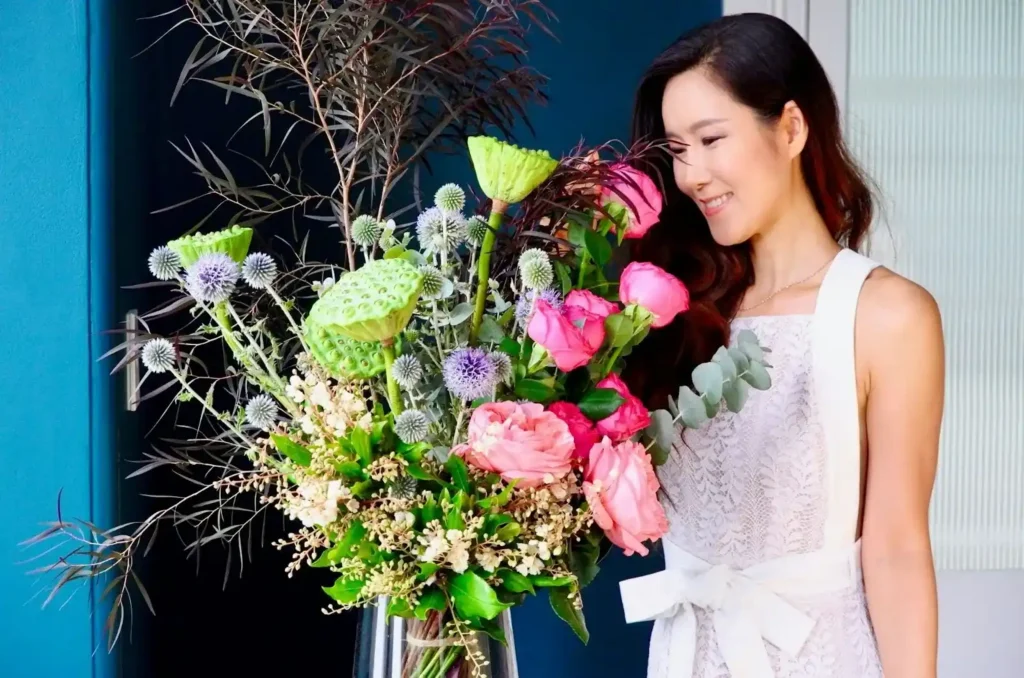
What to send, by relationship
- Professional or formal: white and green, soft blush, or a native arrangement. Elegant, unambiguous, never romantic.
- Warm and personal: mixed seasonal brights, sunflowers, gerberas, garden roses in warm tones.
- Someone with no vase or no time: vased arrangement, always.
- A shared space like a staffroom or ward: large vased design, robust varieties, long-lasting.
- Someone who hates waste: natives or a potted plant. Two to four weeks, or years.
- Someone who loves to garden: a potted native or a herb, which they can plant.
Avoid red roses entirely for thank you flowers unless the recipient is your partner. Red reads as romantic and creates awkwardness you do not need.
Longevity matters more here than usual
Gratitude benefits from lingering. A bouquet that sits on a staffroom bench for two weeks keeps saying thank you every day, which is a far better outcome than something spectacular that collapses in four days.
Lean toward the long performers: natives like banksia and kangaroo paw, chrysanthemum, carnation, alstroemeria, lisianthus, orchids, and dried elements. Two to four weeks is entirely achievable.
Card messages that actually say something
The most common mistake in thank you flowers is a card that says only “thank you”. Name the thing.
For a teacher:
- “Thank you for everything you did for Ellie this year. She talks about your class constantly.”
- “You made a genuinely difficult year easier for our family. Thank you.”
For medical staff:
- “Thank you to the whole ward. You were kind when it counted, and we noticed every bit of it.”
For a neighbour:
- “Thank you for three weeks of bins, parcels and cat duty. We owe you.”
For a host:
- “Thank you for Saturday. Best meal we have had all year, and we are still talking about the dessert.”
For a colleague:
- “Thank you for covering for me. I know exactly how much work that was.”
For a friend:
- “Thank you for answering the phone that night. I will not forget it.”
Specificity is everything. “Thanks for your help” is polite noise. “Thanks for driving me to the hospital at 5am” is a message someone keeps.
The evidence that it works
This is not just etiquette, it is measurable. Research summarised by QUT found that gratitude mediated effects on satisfaction, trust, commitment and psychological attachment among the consumers studied.
The mechanism is straightforward: expressed gratitude strengthens the relationship on both sides. Which means thank you flowers are not just a nice gesture toward someone else. They are one of the highest-return social investments available for around sixty dollars.
Timing
For a host: the next day. Sending the day after a dinner party is far more thoughtful than arriving with a bouquet.
For teachers: last week of term, not the last day, when the staffroom is already overflowing.
For medical staff: on discharge or shortly after.
For everyone else: within a week of whatever they did, while the specific memory is still sharp.
Same day works if you have left it late. Next day is better, because your florist can buy specifically for the arrangement at the market that morning.
Sydney delivery specifics
For schools, deliveries go to the front office. Include the teacher’s full name and the class or department.
For hospitals, include the ward name and check the policy first. Some wards do not accept fresh flowers at all.
For offices, include the company name, level and department, and confirm reception hours. North Sydney and CBD towers often require concierge handover.
For homes, include the unit number, intercom code and recipient mobile. On the Lower North Shore, missing unit numbers are the most common cause of failed deliveries.
Expect forty to eighty dollars for a solid arrangement and ten to twenty dollars delivery for inner suburbs like Mosman, Cremorne, Neutral Bay, North Sydney, Cammeray, Balmoral and Manly.
If you want to pair it with something
A gift voucher alongside thank you flowers works well for someone whose taste you do not know. Just check the terms, since the ACCC sets out rules on gift card expiry dates and post-supply fees, including a minimum validity period. An expired voucher is a sour ending to a warm gesture.
Otherwise, keep it simple. Good flowers and a specific card are plenty.
Make it a habit
The best thing about thank you flowers is that there is no occasion, which means you can send them any time. Once a quarter, think of someone who did something for you and never got properly acknowledged, and send them something.
It costs less than a dinner out and does considerably more work.